

Chemical Peels
In Boston
Are you bothered by sun-damaged skin, brown “age” spots, fine lines and wrinkles, dry or flaky skin, rough skin texture, uneven skin tone, adult acne, superficial facial or acne scars, or excessive oil on your face? Or is it more due to the fact that your skin seems to have lost its healthy, youthful glow? Chemical peels can help you. Chemical peels can also improve whiteheads and blackheads that are seen with acne or excessively oily skin. When you come into your nearest Boston-area SkinHealth Centers location, you can rest assured that your Chemical Peel will leave your skin looking fresh and renewed!


Chemical peels are a category of advanced clinical skin rejuvenation treatments that help to reverse the signs of aging and the damage of past sun exposure. There are several different types of chemical peels, as well as different strengths of peels. After a consultation with a SkinHealth Center professional, your chemical peel program will be developed based on your unique needs.
Chemical peels can be performed on all parts of the body: face, neck, chest, back, arms, and legs. Although one peel can significantly improve the appearance of the skin, you may require more than one peel to achieve your best results. Each day thousands of our skin cells die, flake off, and are replaced by new cells. Chemical peels speed up the process. With all chemical peels, a topical solution is applied to the skin to loosen and remove the upper layers of dead and damaged skin and reveal new, fresher skin underneath. This treatment also stimulates a burst of renewal and collagen growth in the deeper layers of the skin.
Hundreds of chemical peels have been performed at SkinHealth Centers as part of an exclusive SkinHealth treatment protocol. The results have been outstanding.
Chemical peels usually begin with vigorous cleansing of the skin. The depth of the peel depends on the chemical used. Very light peels (e.g. low potency glycolic acid, 10-20% TCA) only penetrate the dead skin cells that sit atop the epidermis and produce almost no injury. Sometimes, this level of peel is called “exfoliation”.
At our SkinHealth Centers, our Aestheticians have seen our Boston Chemical Peel patients the following benefits:
Light peels injure the entire epidermis and stimulate the regeneration of the new epidermis. This level of chemical peel may produce a burning sensation during the procedure. Recovery from light peels is quick- hence the name “lunchtime peel”. Improvement in the appearance of photoaged skin and scarring can be achieved with repeated use.
Medium-depth peels involve injury to the upper level of the dermis. Injury to the dermis stimulates the formation of collagen and “plumps” up the skin. TCA, in combination with another chemical such as glycolic acid, is used safely with minimal discomfort. Burning is the most common complaint during the procedure and this is usually well-controlled with cool compresses or topical anesthetics.
At SkinHealth Centers, several types of chemical peels are offered:
Immediately after the first treatment, you will see a difference – your skin will have a fresh glow, a more even tone, and feel smoother and softer. Each procedure lasts a few minutes and progressive improvement in the skin will be noted with each treatment.
Acne-prone skin can benefit from glycolic acid peels, as can people with dry, sun-damaged skin, fine wrinkles, or blotchy pigmentation. Most skin types respond well to glycolic peels, and there are very few risks or problems associated with them.
Glycolic peels are most successful in a series of four or more, spaced approximately two weeks apart. The number of sessions necessary depends on the results you are trying to achieve. Glycolic acid is used in varying strengths, depending upon your skin condition. Your SkinHealth professional will discuss with you the best program to fit your needs.
VI Peels are a gentle way to treat acne, fine lines, wrinkles, keratosis pilaris (dry, rough patches and tiny bumps), and sun spots and discoloration.
The best candidates for a Chemical Peel in Boston are women and men whose skin looks dull and has a “weathered” look; people with a blotchy complexion, fine lines, and wrinkles, dry or flaky skin; people who have acne, acne scars or oily skin; or a variety of other conditions. We also ask that you be in overall good health and maintain realistic expectations of the outcome of the treatment.
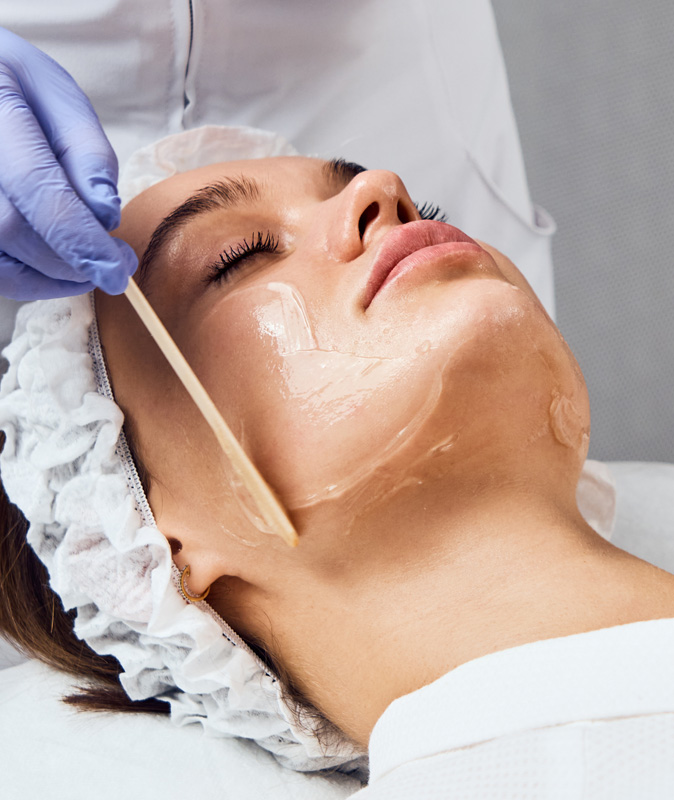
When getting your Chemical Peel, your face will first be cleansed before your treatment. Depending on the level of peel you are getting, you may be given a numbing cream or administered local anesthesia for a more comfortable experience. The Aesthetician will apply a chemical solution to your face, which will produce a slight burning sensation but should pass rather quickly as the solution itself acts as an anesthetic. After a few minutes, the solution will then be wiped off and a neutralizing solution is applied to stop the chemical reaction. We do provide a handheld fan to help cool off your face.
The treatment could take anywhere from 15 minutes to a few hours depending on the size of the treatment area and the degree of your chemical peel.

If you are looking into Chemical Peels in Boston, the first step is to contact your closest SkinHealth Centers location and schedule a consultation. During this appointment, you will meet with your physician who will examine the area of your skin that you are looking to improve and discuss what your goals are from the treatment. They will also ask you about your medical history, during which time you should be completely honest to prevent any unnecessary risks or side effects. They will also explain the different outcomes that each level of chemical peel and which option would be best for your situation. If you agree with the treatment plan that they create for you, you will be able to have your first Chemical Peel session after your consultation. If you need to come in another day for any reason, our Patient Coordinator will help set up that appointment.
You will be able to return to your daily activities after your Chemical Peel, however, we do recommend taking it easy the rest of the day. Your face will most likely be reddened and have some mild swelling. After about 24 hours, a crust or scab will form to protect your new skin, do NOT pick at it! It can usually be removed with some gentle washing with soap and water followed by the application of creams, moisturizers, or ointments. We will provide you with post-treatment care instructions for you to get the best results. After the crust falls off within a few days, your face will again appear red, similar to a sunburn. Your face will then gradually lighten into a pinkish hue, getting lighter and returning close to normal after several weeks when your skin has completely regenerated. Most lighter freckles and birthmarks will disappear, however, heavier freckles will still be noticeable.
As your skin heals, you may feel “abnormal” sensations, such as itching or tingling, but this is part of the process and nothing to worry about. You can always alleviate unpleasant feelings with cool compresses and over-the-counter pain medication. While you are fine to do your average routine within a day or so, you should avoid any strenuous activities for two to three weeks. You will also want to avoid sunlight as best as possible for the first three weeks as your pigmentation will have been stripped away during the treatment. Once your pigmentation returns, we strongly encourage you to wear good sunblock. After this three-week mark, you can wear light makeup again, but you should look into non-allergenic makeup to avoid irritating the skin.
The cost of a Chemical Peel in Boston is determined by multiple factors such as which Chemical Peel you are getting, the surface area being treated, and the degree of the peel. During your consultation, the physician will be able to discuss pricing for everything and once your plan is made, our Patient Coordinator will be able to provide you with a cost breakdown.
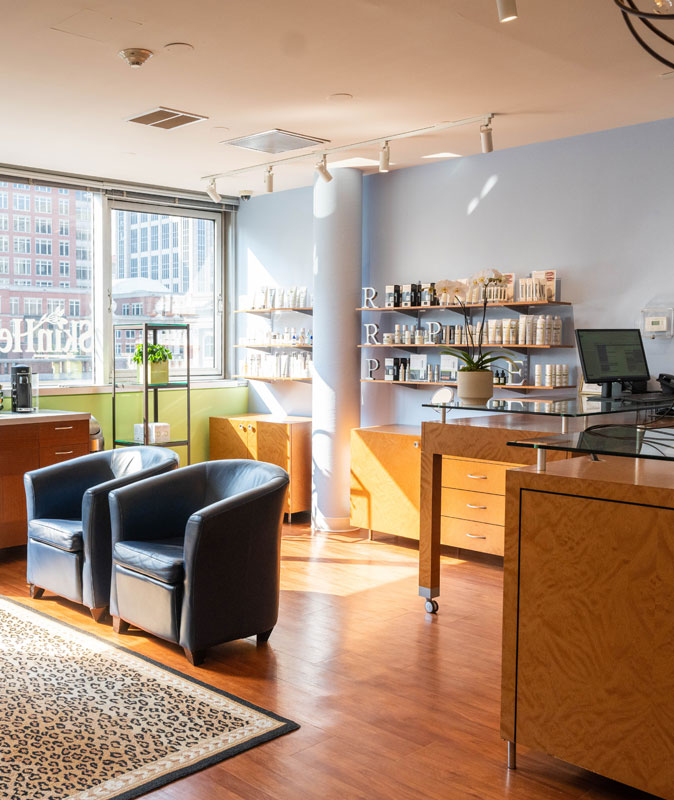
SkinHealth Centers in Boston and Wellesley provide the latest, proven methods to restore and maintain healthy-looking skin and a glowing complexion. We are experts in the field of facial rejuvenation for men and women, and we have a wide range of Chemical Peel options. We are staffed and run by professionals, which include Board-Certified physicians and nurse practitioners who are experienced, trained specialists in Cosmetic Surgery. Our team is constantly undergoing training and attending seminars to ensure that we can provide the best methods and make informed decisions when working with our patients.

If you are unhappy with certain skin imperfections like skin texture, fine lines, uneven pigment, sun spots, or acne, a Chemical Peel from SkinHealth Centers in Boston and Wellesley may be the perfect solution for you! To schedule a consultation with one of our highly experienced team members, give us a call or request an appointment through our website today!

Cheryl Clarkson, Founder